Last updated November 23, 2026
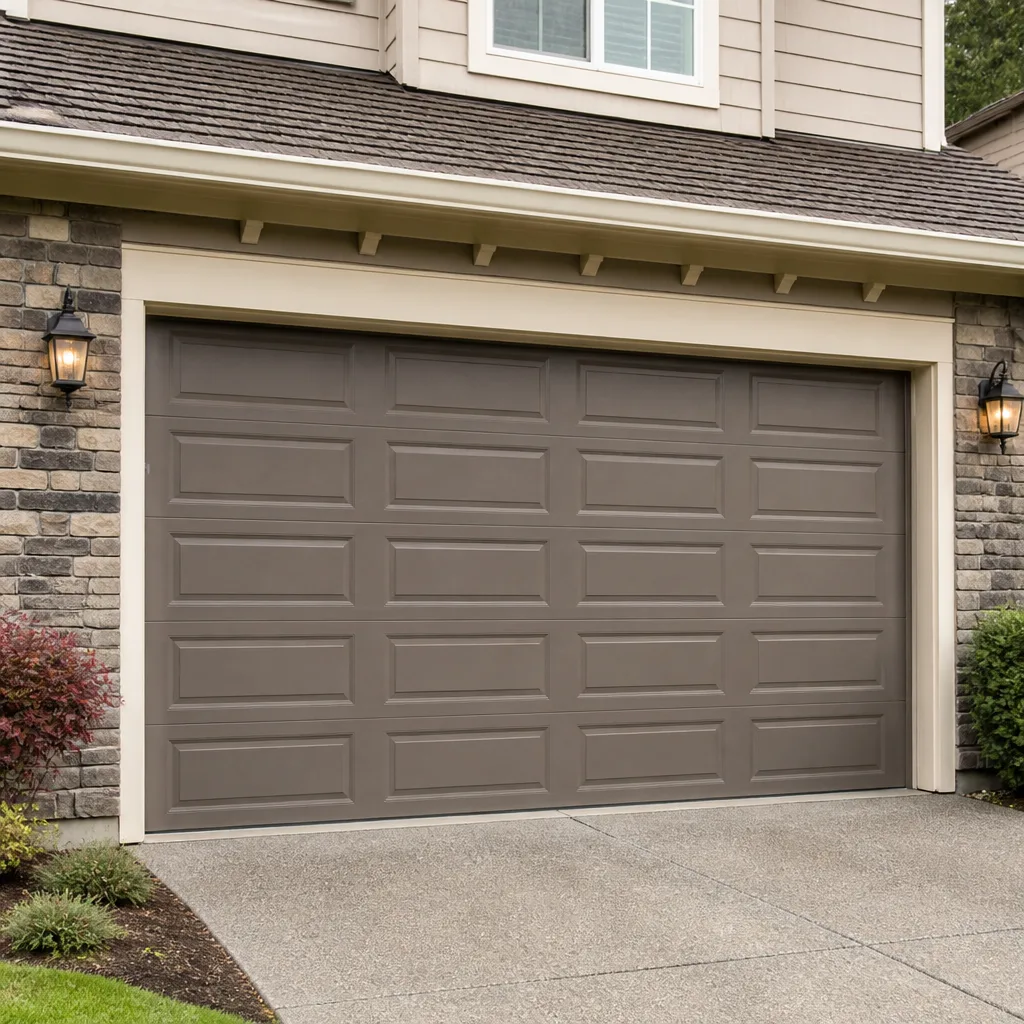 Raised-panel steel
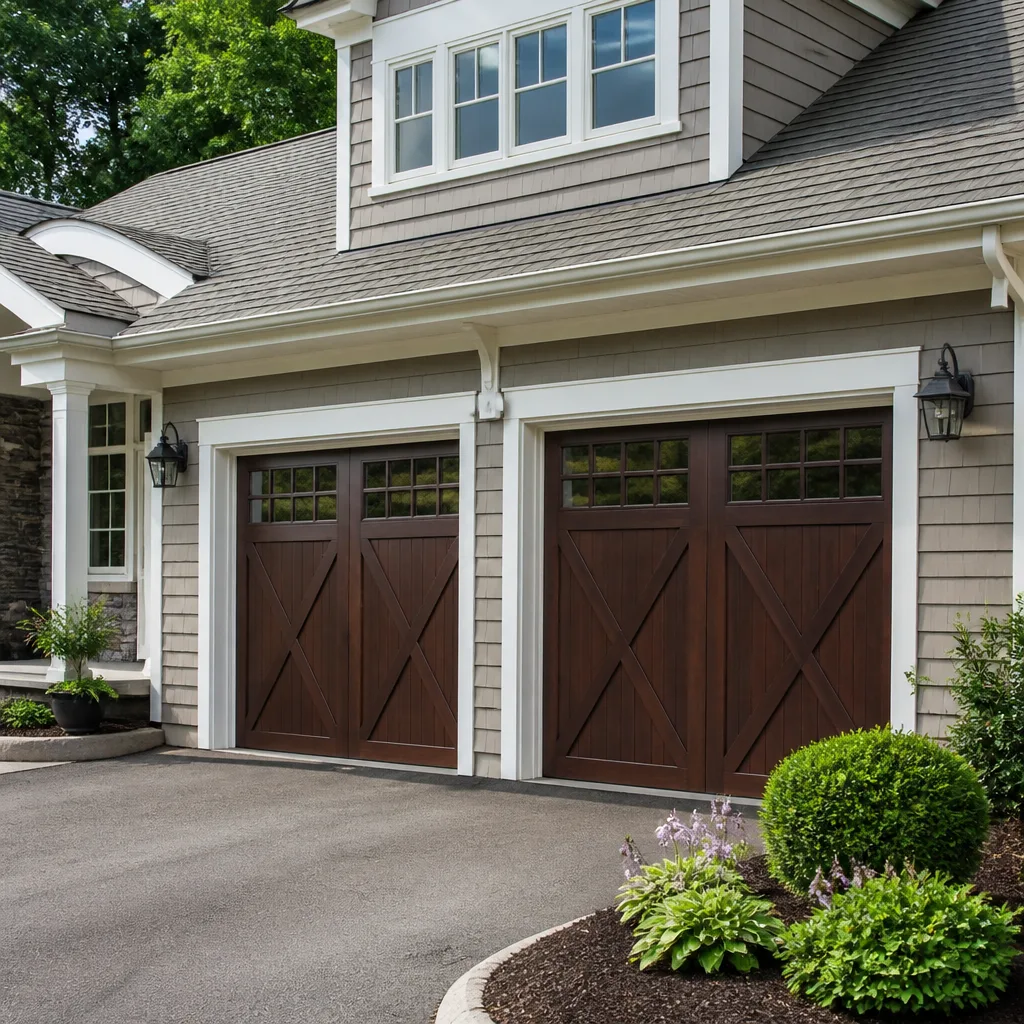 Carriage house
 Modern flush
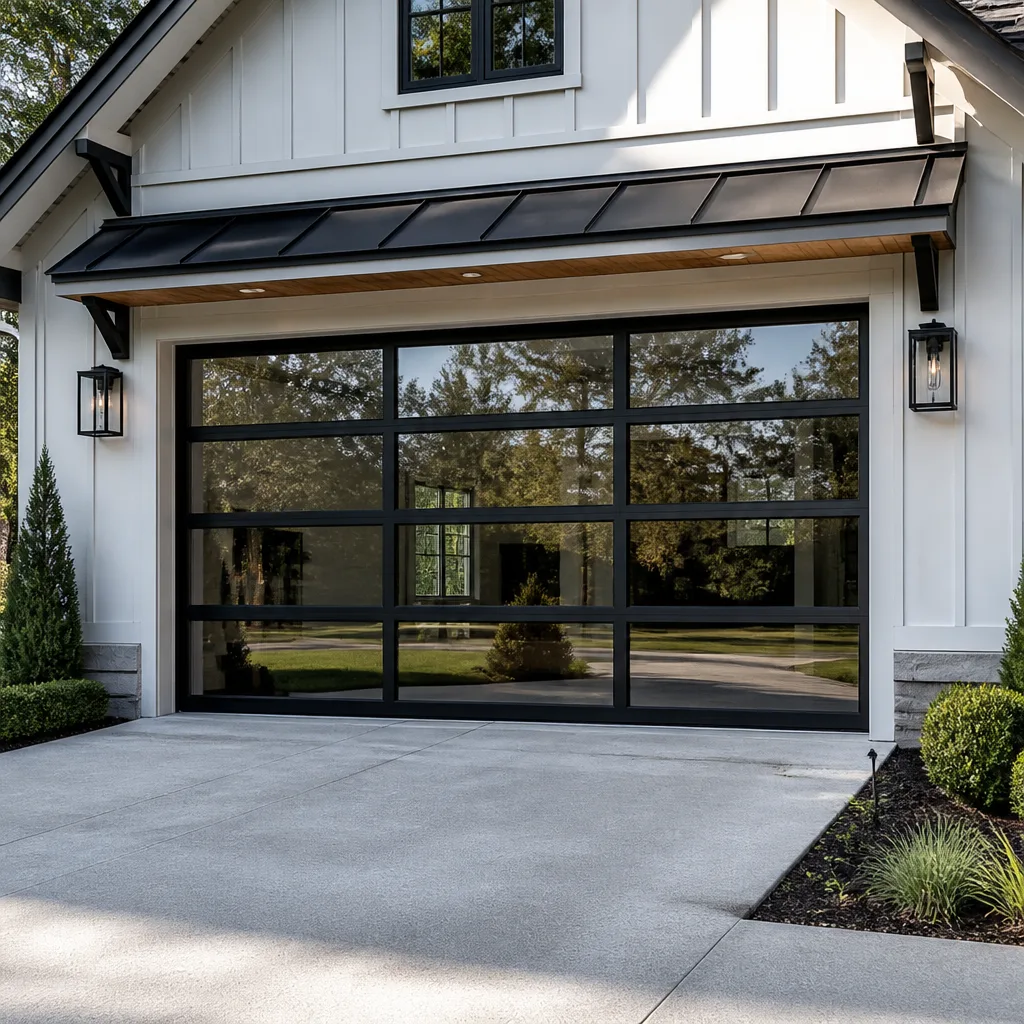 Full-view glass
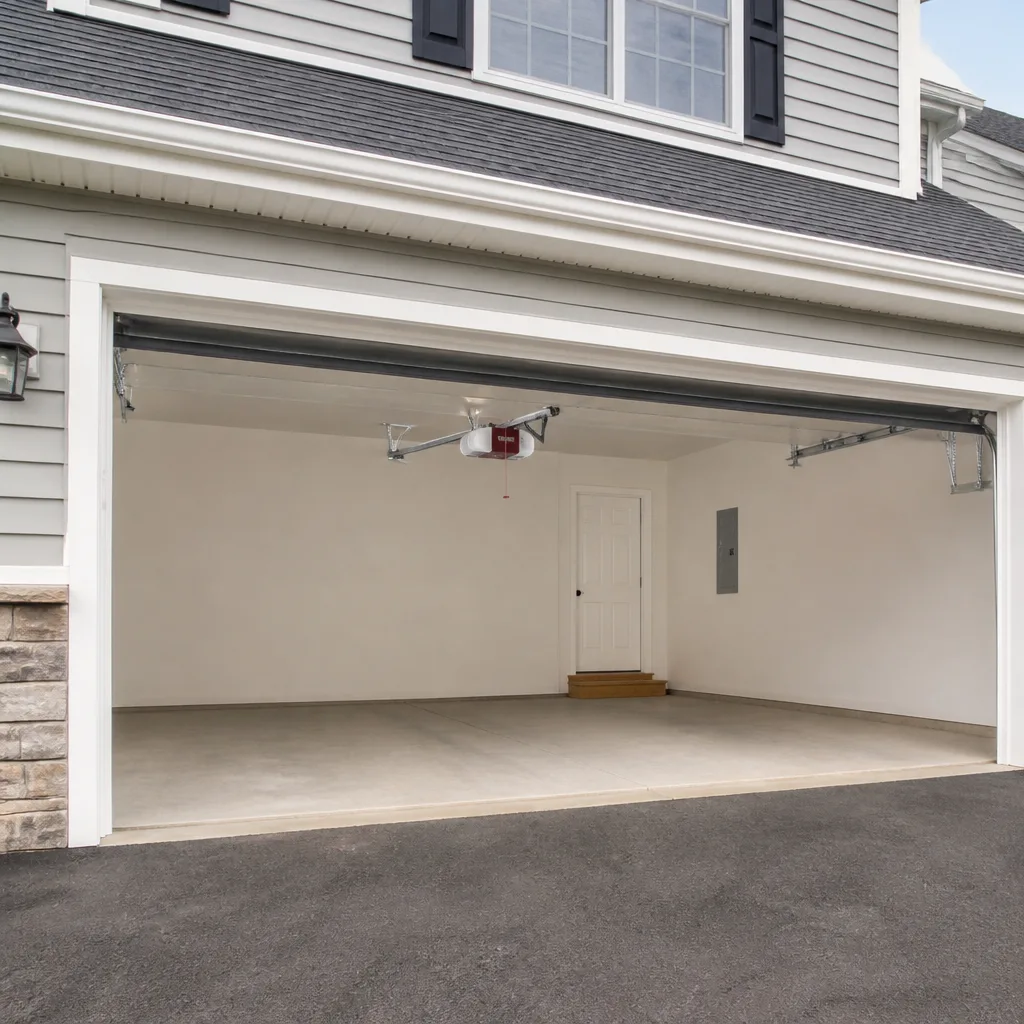 LiftMaster openers
 Chamberlain openers
Full 25-point door and opener safety check with every visit - springs, cables, rollers, tracks, and your LiftMaster or Chamberlain opener included
You get a price before we start. It does not change when the pro arrives.
Get your free estimateDIY vs Professional Garage Door: The Levittown Homeowner’s Decision Guide
Most garage door advice online treats the DIY decision as a question of confidence. “If you’re handy, go ahead; if not, call someone.” That framing is wrong, and it’s dangerous. The real question isn’t whether you can turn a wrench. It’s whether the specific task in front of you has a failure mode you can survive. Changing a rubber seal that fails? You redo it. Adjusting a torsion spring that fails? A winding bar can leave your hands before you know it moved. This guide draws a hard line through garage door work: five tasks Levittown homeowners can genuinely handle, a few that need caution, and a handful that are professional-only no matter how good the tutorial looks. We’ll also show you how to diagnose your door before you call, so the conversation is short and the repair starts fast.
Quick Answer
In Levittown, PA, you can safely handle weatherstripping, roller replacement, safety sensor alignment, remote programming, and lubrication yourself with standard tools. Torsion springs, cables, and bottom brackets are professional-only because they store and release hundreds of pounds of tension that can cause severe injury when it lets go. Everything else falls into a middle zone where the decision depends on your tools, your comfort with heights, and how the door is built.
Styles & brands we work with
- Raised-panel steel
- Carriage house
- Modern flush
- Full-view glass
- LiftMaster openers
- Chamberlain openers
Table of Contents
- The Real Line: Failure Modes, Not Skill Levels
- Five Tasks You Can Legitimately Do Yourself
- The Caution Zone: DIY That Can Go Either Way
- Professional-Only Work and Why It Stays That Way
- The Real Cost of a DIY Mistake on a Structural Part
- How to Diagnose Your Door Before You Call
- What Makes Garage Doors in Levittown Different
- Repair vs. Replace: How to Decide
The Real Line: Failure Modes, Not Skill Levels
A garage door is one of the heaviest moving assemblies in a house. A standard single-car door weighs in the neighborhood of 130 to 200 pounds; a double-car door runs higher still. That weight is balanced by springs under tension, guided by cables, and moved by an opener that’s designed to lift only a fraction of the load. Every part of the system is under some form of stress, but not every part fails the same way.
That’s the line. A weather seal that tears just lets in water. A torsion spring that lets go releases stored energy in a fraction of a second, and whatever tool is in your hand goes with it. We’re not trying to scare anyone away from their own garage. We’re pointing out that “can I do this?” is the wrong question. “If this goes wrong, what happens?” is the right one. That question gives you a clean, defensible answer for every task on the door.
Three Categories, One Rule
Every job on a garage door lands in one of three buckets:
- Safe DIY: the failure mode is inconvenience or a do-over, never injury. Standard hand tools, ground-level or low-ladder work.
- DIY with caution: the failure mode is property damage, a stuck door, or a moderate injury risk. You might be fine, but the margin is thinner than it looks.
- Professional-only: the failure mode includes serious injury. Springs, cables, and bottom brackets live here, with no exceptions for confidence, experience, or video quality.
That framework is what we use when a Levittown homeowner calls and asks whether they should tackle something themselves. We’d rather tell you honestly that you can save the money than have you call back in a worse situation. In our experience, homeowners respect a straight answer far more than a hard sell, and it keeps the relationship honest.
Five Tasks You Can Legitimately Do Yourself
These five jobs are within reach for most Levittown homeowners with a basic tool kit: a screwdriver, a socket set, a step ladder, and a few hours. None of them put you near a loaded spring or a tensioned cable. If you enjoy this kind of work, knock yourself out.
- Weatherstripping replacement. The rubber or vinyl seal along the bottom of the door and around the sides wears out after a few seasons of freeze-thaw cycles. It’s a ground-level job: pull the old seal out of its channel, slide the new one in, trim the ends. You’ll need the right profile for your door, which is stamped on the existing seal or available from the door manufacturer. Fifteen minutes on a warm day, and the door seals properly again.
- Roller replacement. Rollers wear, get flat spots, or start squeaking. On most doors you can replace them one at a time by removing the hinge bracket, sliding the old roller out, and pushing a new one in. The one caveat: never remove a roller from a hinge that also carries a cable. Leave the bottom bracket and any cable-attached hinge alone.
- Safety sensor alignment. If your door reverses or refuses to close, the two small sensors near the floor are the first thing to check. Look for a blinking LED, clean the lenses, and make sure both units point at each other. A sensor knocked slightly out of line is the single most common cause of a door that “won’t close” and one of the fastest fixes in the whole system.
- Remote and keypad programming. Pairing a new remote or changing a keypad code is a routine job. On LiftMaster and Chamberlain openers, the learn button on the motor head takes the new remote in seconds; on Craftsman units, the process is similar. Your manual or the opener’s model number will get you the exact sequence.
- Lubrication. A few drops of garage-door-specific lubricant on the hinges, rollers, and the torsion spring (a light wipe, not a soak) quiets a noisy door and slows wear. Avoid heavy grease, which collects grit, and avoid WD-40 as a long-term solution because it attracts dust. Twice a year is plenty in this climate.
If any of these feel outside your comfort zone, that’s fine too. The point isn’t that every homeowner must DIY; it’s that some tasks carry no real risk of injury if you take your time and follow the door’s manual.
The Caution Zone: DIY That Can Go Either Way
Between “safe” and “professional-only” sits a middle band where the answer genuinely depends on you. These jobs aren’t inherently dangerous, but the margin for error is thinner, and a botched attempt can turn a small job into a bigger one. Walk through each one honestly before you decide.
Track Adjustment and Bracket Tightening
The vertical and horizontal tracks guide the door, and a track that’s bent, loose, or out of plumb can cause the door to bind, scrape, or jump off the rollers. Tightening a loose bolt is one thing. Bending a track back into true is another, and if you overdo it, the door stops closing correctly. A gentle adjustment with a rubber mallet and a level is reasonable. Anything involving re-hanging the horizontal track or re-anchoring to the wall is a call-us job.
Panel Cosmetic Work
Replacing a single bottom panel that’s been dented (a common result of a car bumper nudge in a tight Levittown driveway) is doable on some doors, but a steel panel under tension from the surrounding structure can be difficult to seat, and a poorly seated panel adds weight and stress elsewhere. Small cosmetic touch-ups (touch-up paint on scratches, replacing trim) are safe. Full panel swaps are worth having a technician look at.
Opener Replacement (Same Brand, Same Rail)
Swapping an opener for a newer unit of the same brand, on the same rail, with the same wiring, is a job a confident DIYer can sometimes complete. It’s still a two-person job electrically, and anything that requires new wiring, a new mounting point, or a bypass of the wall control is worth professional hands. Since we service LiftMaster, Chamberlain, Genie, and Craftsman openers, we regularly see what happens when a swap goes sideways: a miswired wall control, a misaligned carriage, or a limit switch set incorrectly, which causes the door to reverse mid-travel.
For any of these, check the door’s balance first (lift it by hand to waist height and see whether it stays put). A door that won’t hold its position has a tension problem, and once tension is in play, the work moves from caution zone to professional-only.
Professional-Only Work and Why It Stays That Way
There are three jobs on a garage door where the tutorial quality doesn’t matter, your confidence doesn’t matter, and your experience with other home repairs doesn’t matter. These stay in professional hands because the energy stored in the system can kill or seriously injure you in an instant.
Torsion and Extension Spring Work
A torsion spring stores energy when the door closes and releases it when the door opens. That energy is what makes a 200-pound door feel light enough to lift with one hand. When a spring is unwound, the energy is gone. When it’s wound, it’s loaded. The winding bars that technicians use to adjust the spring are the only thing standing between that stored energy and the person holding the bars. If a winding bar slips, it moves with enough force to break bones or worse, and no video can prepare you for that moment. Spring replacement is also not a “match the visual” job: a spring’s wire size, inside diameter, and length all have to match the door’s weight. A mis-sized spring either can’t hold the door or overpowers it, and both outcomes stress every other part.
If a spring fails, the safest thing you can do is stop using the door. Don’t try to open or close it. Don’t attempt to unwind the remaining spring yourself. Call for garage door spring repair, and in Levittown that means a same-day visit in most cases. Spring repair is a service we perform as a matter of routine.
Cable Replacement
The cables that run along the sides of the door are what keep the door’s horizontal travel synchronized and what hold the tension between the spring and the bottom of the door. When a cable fails, it whips and can leave a door hanging from one side, which is an immediate danger to anyone nearby and can bend the vertical tracks beyond repair. A frayed cable, a cable that’s slipped off the drum, or a door that’s sagging on one side is a professional-only call. This is not a job worth attempting with a replacement cable and a pair of pliers.
Bottom Bracket Repair
The bottom bracket is the point where the cable attaches to the door. It’s under constant tension, and it’s also one of the highest-failure points in the assembly because it takes the full weight of the door. If a bottom bracket cracks, snaps, or bends, the cable’s stored energy is aimed directly at the person working on it. Even adjusting the attachment bolt is dangerous because the cable can slip. Bottom brackets are professional-only, full stop.
What “Professional-Only” Actually Means
- Do not attempt to unwind, wind, or replace a spring with hand tools.
- Do not remove a cable or loosen a cable drum.
- Do not unbolt a bottom bracket, even to inspect it.
- If a spring has already broken, do not operate the door. Call for service.
- If you’re not sure what failed, describe it to a technician and let them decide.
Our technicians have up to 9 years of experience, and spring work is one of the reasons that experience matters. It’s also why we don’t hand a flashlight to a homeowner and tell them to “just try.”
The Real Cost of a DIY Mistake on a Structural Part
The most expensive garage door mistake isn’t usually the part that fails first. It’s the parts that fail because of it. Garage doors are balanced systems, and pushing one component out of alignment sends stress straight into the next one.
Consider what happens when a spring is replaced with the wrong size. The door might work for a while. Then it starts lifting too fast, and the opener’s gears wear from fighting the imbalance. Then the door’s travel limits drift, and the door closes a few inches short, which means the bottom seal sits unevenly, which means water and cold air come in on every close. The opener motor may fail within a season, and the door’s hinges may wear faster. The original stress on the spring is now showing up in a dozen other places, and each of those repairs adds up.
A cable that slips off its drum, even briefly, can bend the vertical tracks. A bottom bracket that fails under load can whip the cable, bend a panel, and knock the door off its track. A track that’s been hammered back into shape by someone who’s had enough of the door not closing can leave the door running rough for the rest of its life, permanently shortening roller and hinge life. In every one of these cases, the second bill is bigger than the first would have been.
That’s the cascade, and it’s why “I’ll just try it” ends up costing more than a service call. The honest comparison isn’t the price of a spring versus the price of a YouTube tutorial. It’s the price of a proper spring replacement versus the price of a spring replacement plus an opener repair plus a track correction plus a hinge replacement, all in the same year. If the door’s existing opener is a LiftMaster or Chamberlain, those are often the first parts to feel the stress, and their repair costs are real money.
None of this means you should never touch your door. It means the risk-adjusted math favors the five safe tasks for DIY and the three professional-only tasks for a trained technician. That’s the whole framework.
How to Diagnose Your Door Before You Call
When you do call, a good description of the problem saves everyone time. The opposite is also true: a vague call (“the door doesn’t work”) means the technician arrives blind and has to spend the first part of the visit listening and inspecting. That’s fine, but it means the visit is longer than it needs to be. Here’s a five-minute diagnostic you can run yourself, safely, from outside the path of a loaded spring.
- Test the door by hand. Disconnect the opener using the emergency release cord (only with the door fully closed), then lift the door by hand to about waist height. If it stays put, it’s in balance. If it drops or creeps, tension is off and you have a spring or cable problem. Do not re-engage the opener until the door is diagnosed.
- Look at the spring. Visual only. A torsion spring is a horizontal coil above the door; an extension spring runs along each horizontal track. Look for a visible gap, a stretched section, or a spring that’s visibly separated. Do not touch it.
- Check the cables by eye. Look for a cable that’s frayed, slack, or hanging loose from one side. If you see one, don’t move the door.
- Watch the door move. With the door re-engaged, run it up and down once. Note whether it moves evenly or jerks, whether it scrapes, and whether it stops short at the top or bottom.
- Test the sensors. Wave your hand through the sensor beam near the floor. If the opener doesn’t reverse or the door won’t close with the sensors lit steady, note the color of the sensor LEDs.
- Listen at the opener. Is there a click without movement? A hum? A grinding sound? Each one points to a different part of the opener.
When you call (888) 618-9767, that short list is worth more than fifteen minutes of guessing. If the door is stuck open and you need service fast, our Levittown Garage Door Repair Pros team treats a stuck-open door as an emergency because the house is exposed. If the door won’t open and your car is inside, that’s an emergency too. If the problem is a sensor or a remote, it’s usually not.
One note on the door’s manual. Keep it. It has the model number, the spring size, and the adjustment sequence that a technician will ask about, and it’s the source for every safe task in this guide.
What Makes Garage Doors in Levittown Different
Levittown homes have a particular garage door story. Many of the original Levittown houses were built with a single-car garage and an integrated door, and the originals have been replaced or repaired many times since. That means the door on your house may be newer than the house, or it may be an older model with parts that aren’t the same size as what’s sold today. Either way, the diagnosis matters more than the box label.
The weather does its part too. Levittown’s summers are humid and its winters hit freezing, which means the door’s seals, rollers, and hinges go through a full expansion and contraction cycle every year. Wooden panels absorb summer moisture and dry out in winter, which is why paint and trim get more attention here than in a dry climate. Snow and ice can pack into the bottom of the door and freeze the seal overnight, which is one reason a door that runs fine in July suddenly won’t close in February. And the fall leaf drop, followed by spring pollen, fills hinges and rollers with grit if the door isn’t cleaned periodically.
On the code side, most garage door replacements in Levittown require a permit from the local building department, and the requirements can vary by township, so it’s worth confirming before the work starts. We always check with the homeowner’s municipality when a full replacement is on the table. For repairs, a permit is usually not needed, but confirm that too if you’re unsure.
What this means in practice: a door that runs fine in one part of the country may need more attention here. Twice-a-year lubrication and an annual visual check of the springs and cables go a long way. If you’re a homeowner with a 1960s or 1970s door that’s still hanging on its original hardware, that’s a door worth having looked at, because the parts have a service life and no amount of adjustment brings a worn spring back to spec.
Repair vs. Replace: How to Decide
When a door has reached the end of its useful life, the question changes from “who does the work” to “what work makes sense.” Here’s how we think about it.
Repair usually wins when the door itself is in good shape: panels are intact, the tracks are straight, and the problem is a component like a spring, cable, roller, or opener. A door that’s 15 years into a 20-year service life with one broken spring is a repair, not a replacement.
Replacement usually wins when the door has multiple failures at once, or when the failure is structural. Bent panels, rotted wood, a door that’s off-track and can’t be brought back to plumb, or a door that’s been hit by a car and has a frame that’s out of square: those point toward replacement. So does a door that’s been repaired three times in two years, because at that point the repairs are adding up to a new door’s cost.
There’s also the honest middle: a repair can be a bridge to replacement. If the door has two good years left in it and you’re planning to sell, a repair is often the right call. If you’re staying for ten more years, replacement may be the better value, and it’s worth pricing both before deciding. Either way, we always quote the price before any work starts, so you’re never guessing.
On the replacement side, the door’s brand matters for parts availability and for matching the door to the opener. We service LiftMaster, Chamberlain, Genie, Clopay, Amarr, Wayne Dalton, Craftsman, and Raynor, and that fluency means we’re not guessing at the part numbers or the compatibility charts. For an opener question specifically, garage door opener repair covers the most common failure modes.
Common Mistakes to Avoid
- Watching a tutorial and assuming it applies to your door. Torsion springs and extension springs are different jobs, and a tutorial of the wrong type will point you at the wrong parts. Check the door’s manual before you start.
- Removing a roller from a cable-attached hinge. This is the most common way a confident DIYer gets into trouble. Rollers on the bottom bracket and any cable-carrying hinge are off-limits.
- Greasing the tracks. Track lubricant collects grit and gum, which binds the door. Grease the hinges and rollers, never the track surface; the tracks should stay clean and dry.
- Using WD-40 on hinges and rollers as a permanent fix. It quiets the noise temporarily and then attracts dust. A garage-door-specific lubricant lasts.
- Overriding the safety sensors by taping them up. It makes the door close, but it defeats the only thing that stops the door on a child or a pet. Fix the sensor, don’t outsmart it.
- Ignoring a wobble or a scrape in winter. A door that scrapes when it’s cold is telling you a roller or hinge is binding, and letting it run that way wears the tracks. Fix it in winter, not spring.
- Calling every issue an emergency. A sensor out of alignment isn’t urgent; a door stuck open in a Levittown rain is. Knowing the difference means the urgent jobs get the fast service they need.
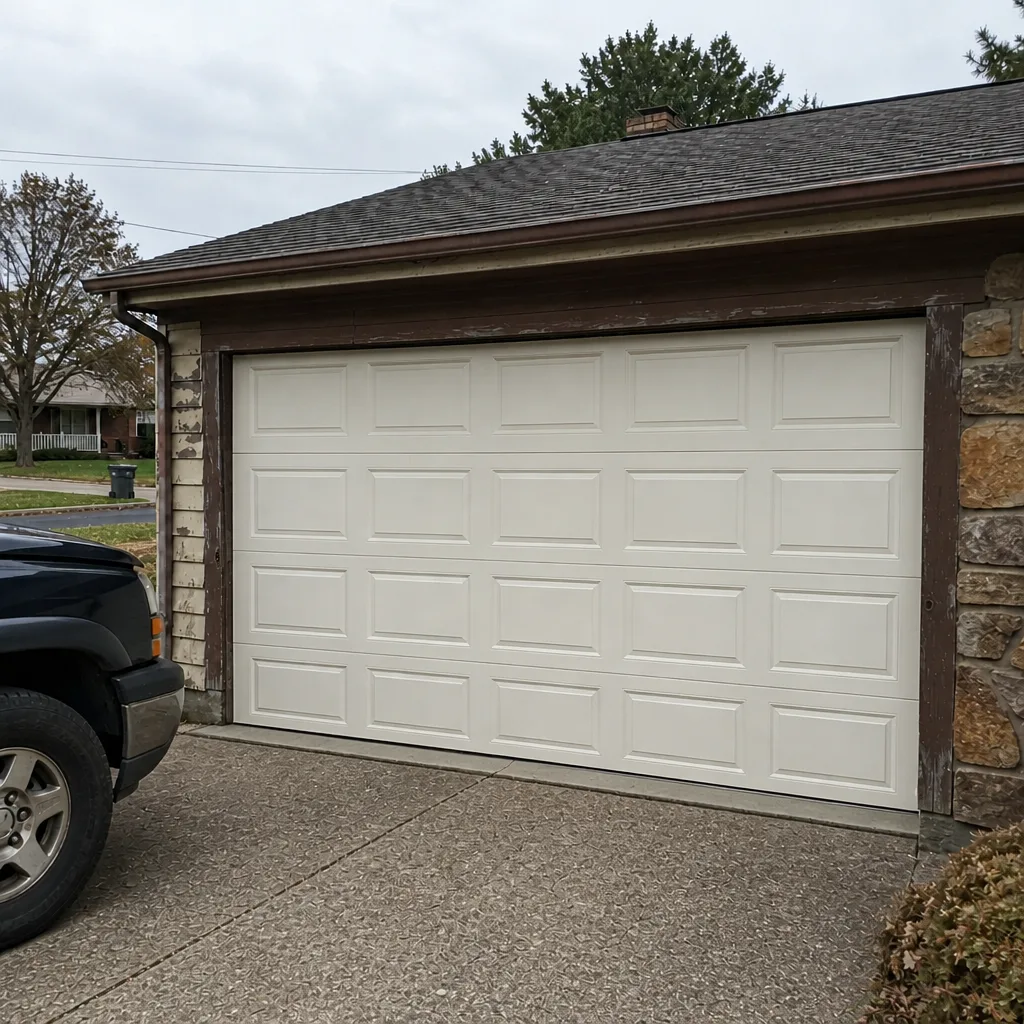
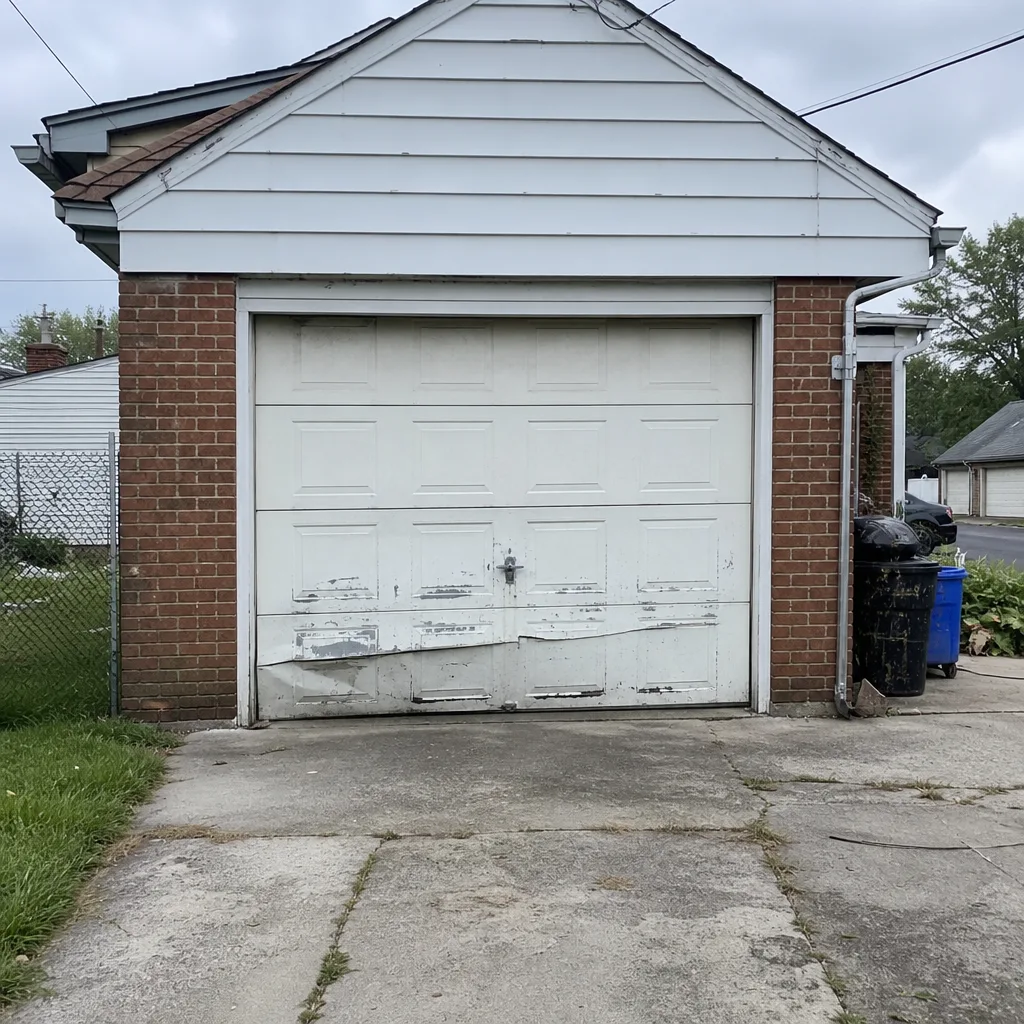
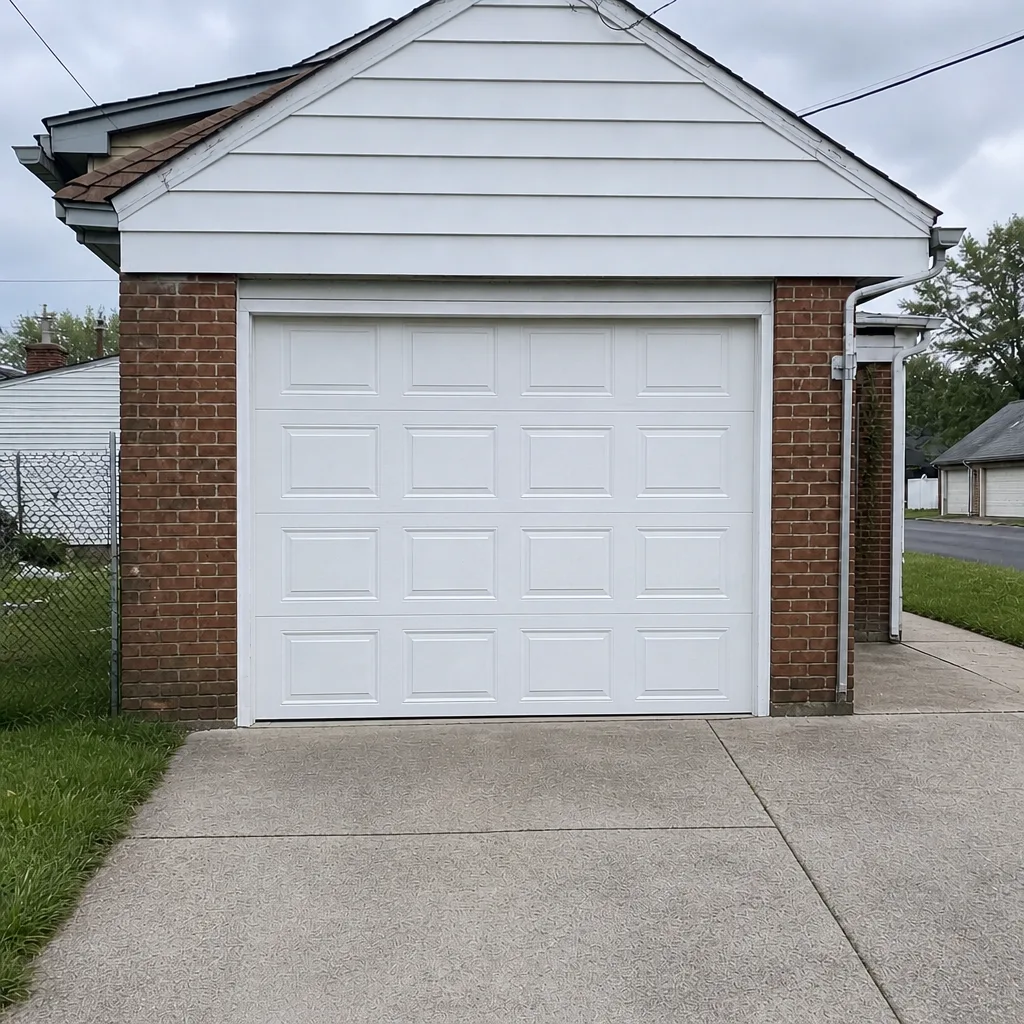
See the difference
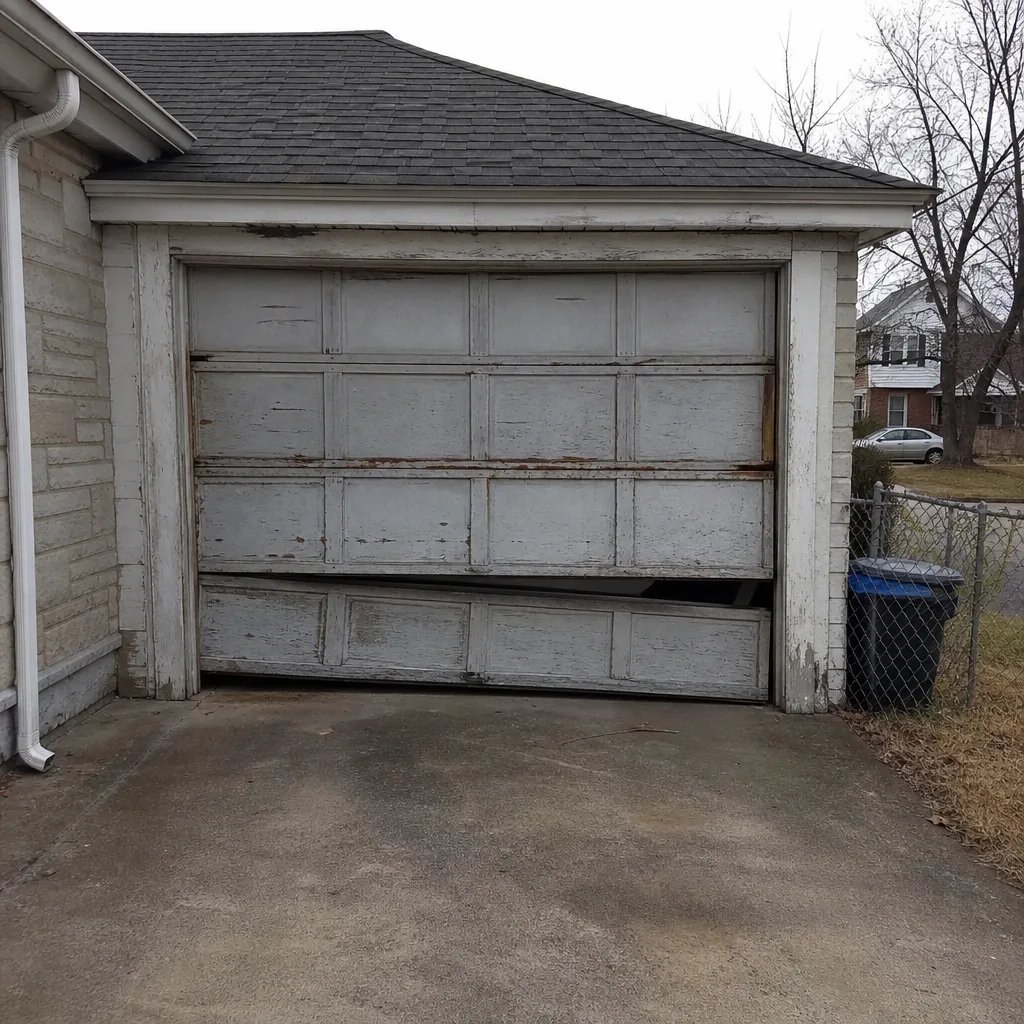 Before
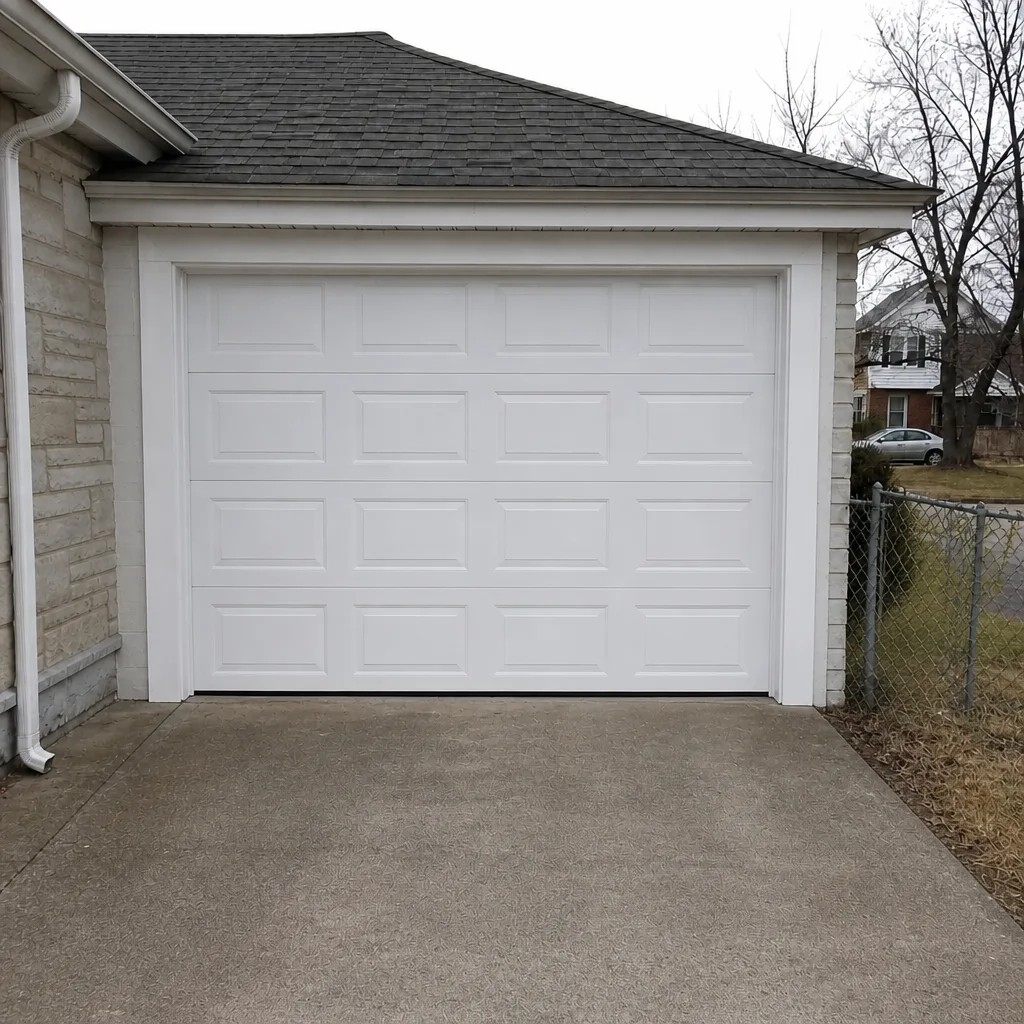 After
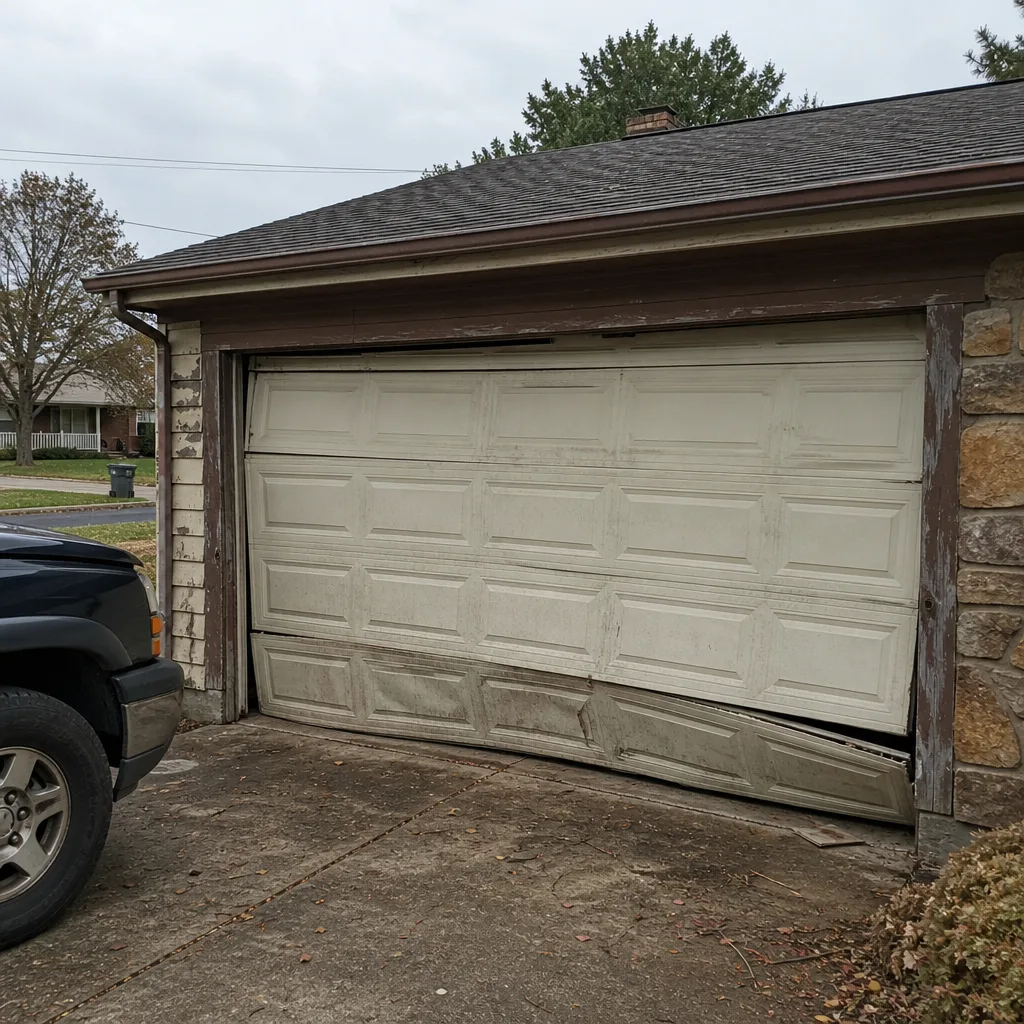 Before
 After
 Before
 After
When to Call a Professional
Call a professional for anything involving a spring, a cable, a bottom bracket, or a door that’s off its track. Call for a broken spring, a door that slams shut, a door that won’t stay open, a frayed cable, a bent track that’s causing scrapes, an opener that hums without moving, or a door that’s been hit. Also call if you’ve started a repair and realized mid-project that the door is heavier or more loaded than you expected; that’s the right moment to stop, not push through.
For a Levittown homeowner, Levittown Garage Door Repair Pros offers free estimates in Levittown. Our technicians have up to 9 years of experience, and we handle emergency service for doors that can’t wait. Call (888) 618-9767 and describe what you’re seeing; a quick diagnostic call often points to the fix before anyone arrives. For routine garage door repair, we’ll walk through what usually fails and what the repair involves so you know what you’re agreeing to before the work starts.
Frequently Asked Questions
No. Torsion and extension springs store enough energy to seriously injure you, and replacing one requires special winding bars, precise sizing, and a controlled release. Even a single wrong turn can be dangerous. Call a professional for spring work; it’s one of the few garage door jobs where the answer is always the same.
Some opener issues are safe to handle: dead remote batteries, sensor alignment, and remote reprogramming. Repairs inside the opener housing, limit switch adjustments, and any wiring changes are not. If the opener hums, grinds, or runs the door at the wrong speed, that’s a professional diagnosis.
Most Levittown garage door repairs are quoted by job, and the written estimate sets the final price. Sensors, remotes, and lubrication sit at the low end; spring replacement, cable replacement, and opener repair sit higher; full door replacement is a separate quote that depends on the size, material, and brand. Call (888) 618-9767 for a free estimate, and we’ll quote the price before any work starts.
In our experience, it’s the door that closes partway and reverses. That’s almost always a safety sensor out of alignment, followed by a spring that’s lost tension. A quick hand-lift test and a look at the sensor LEDs will usually tell you which one you’re dealing with.
A garage door that opens on its own usually has a stuck wall button, a mis-programmed remote, or a radio interference issue from a neighbor’s opener or a nearby device. It’s rarely a mechanical failure. Start by checking the wall button and removing any nearby devices from range, then call if it continues.
Repair if the panels and tracks are in good shape and the problem is a spring, cable, roller, or opener. Replace if the door has structural damage, multiple failures at once, or has been repaired repeatedly in a short span. A free estimate will tell you which side of the line you’re on, and we’ll give you the honest answer rather than the expensive one.
Most Levittown-area townships require a permit for a full garage door replacement, but the rules vary by municipality. Confirm with your local building department before the work starts. Repairs usually don’t require one.
The Bottom Line
Garage door DIY isn’t a question of skill; it’s a question of which failures you can survive. In Levittown, five tasks (weatherstripping, roller replacement, sensor alignment, remote programming, lubrication) are within reach of any homeowner with basic tools. Torsion springs, cables, and bottom brackets are professional-only, every time, because the stored energy in the system doesn’t care how confident you are. Everything in between is a judgment call, and the pre-call diagnostic in this guide will help you make it and describe your problem clearly when you do call. If you’re not sure which side of the line you’re on, call (888) 618-9767 for a free estimate. We’ll tell you honestly whether it’s a DIY job or a service call, and we’ll quote the price before any work starts.
Written by the team at Levittown Garage Door Repair Pros.