Last updated November 23, 2026
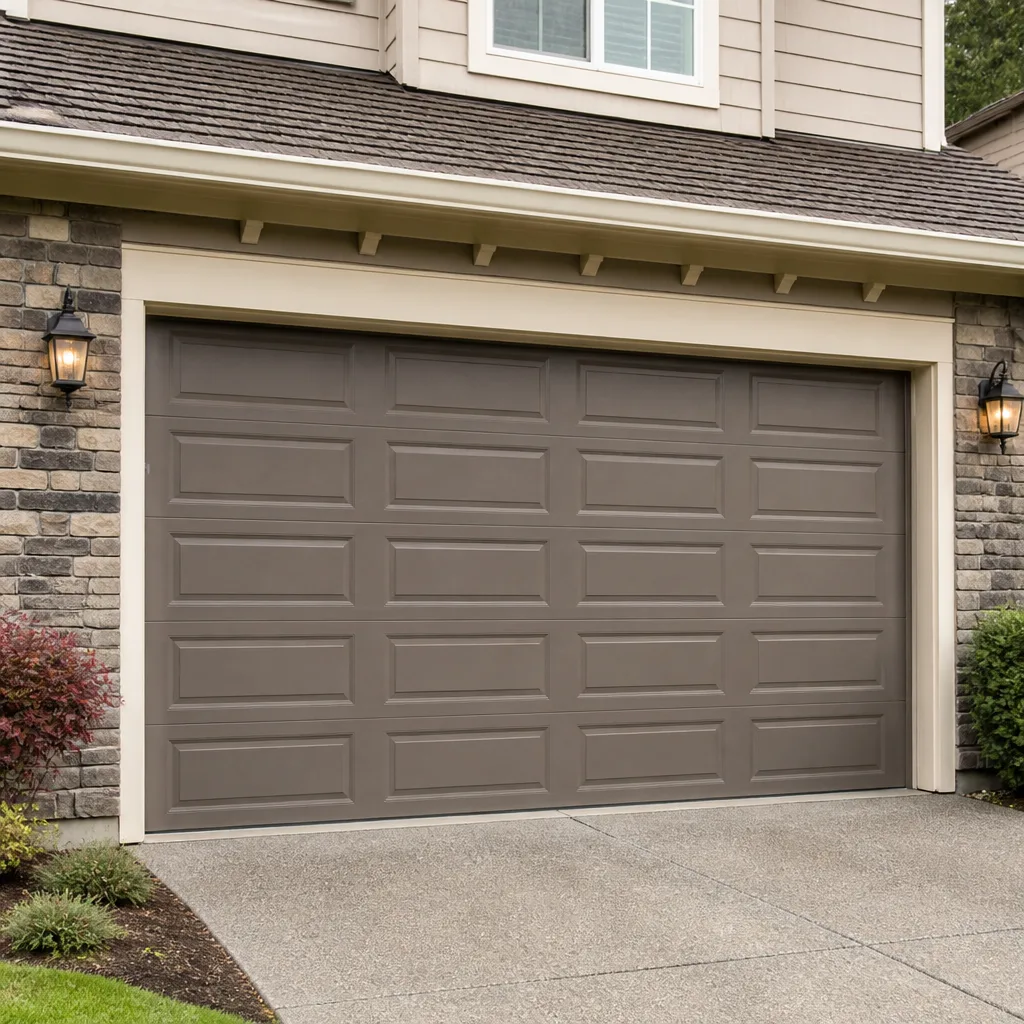 Raised-panel steel
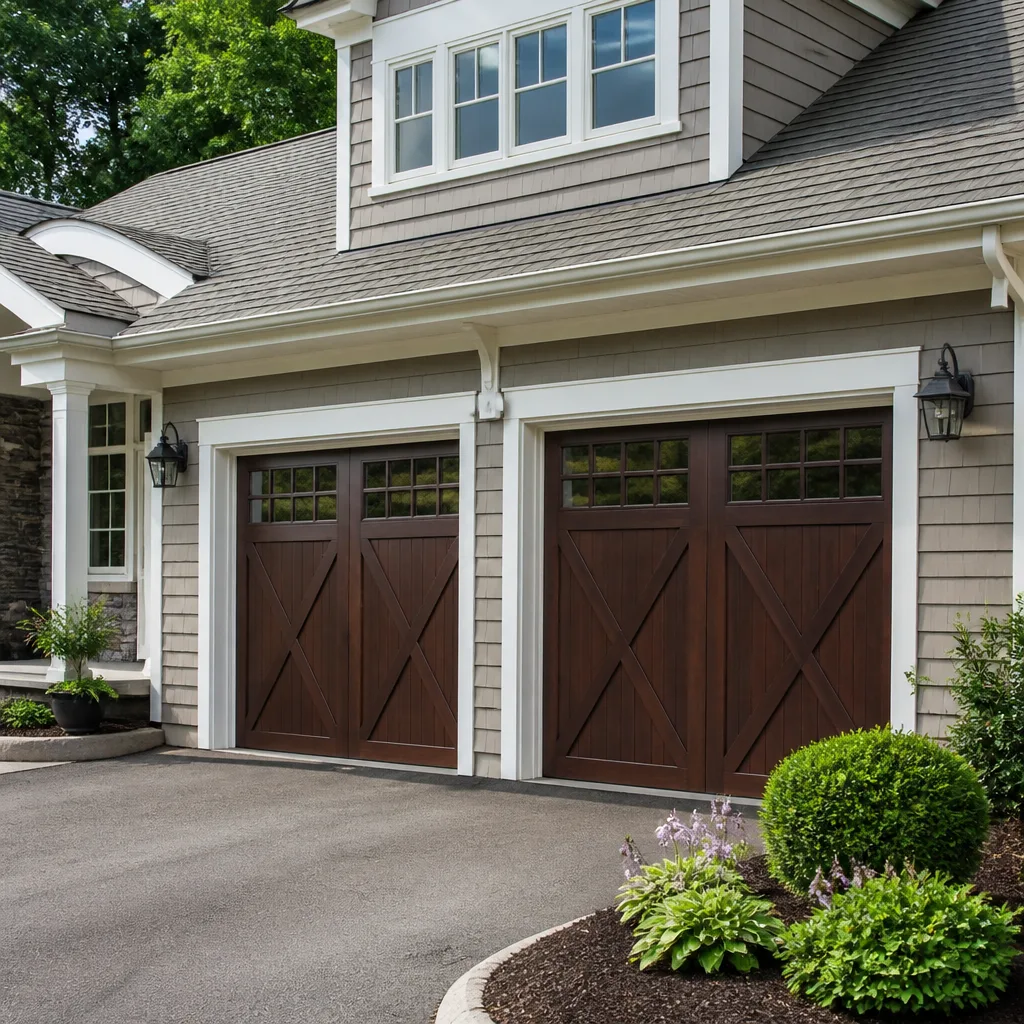 Carriage house
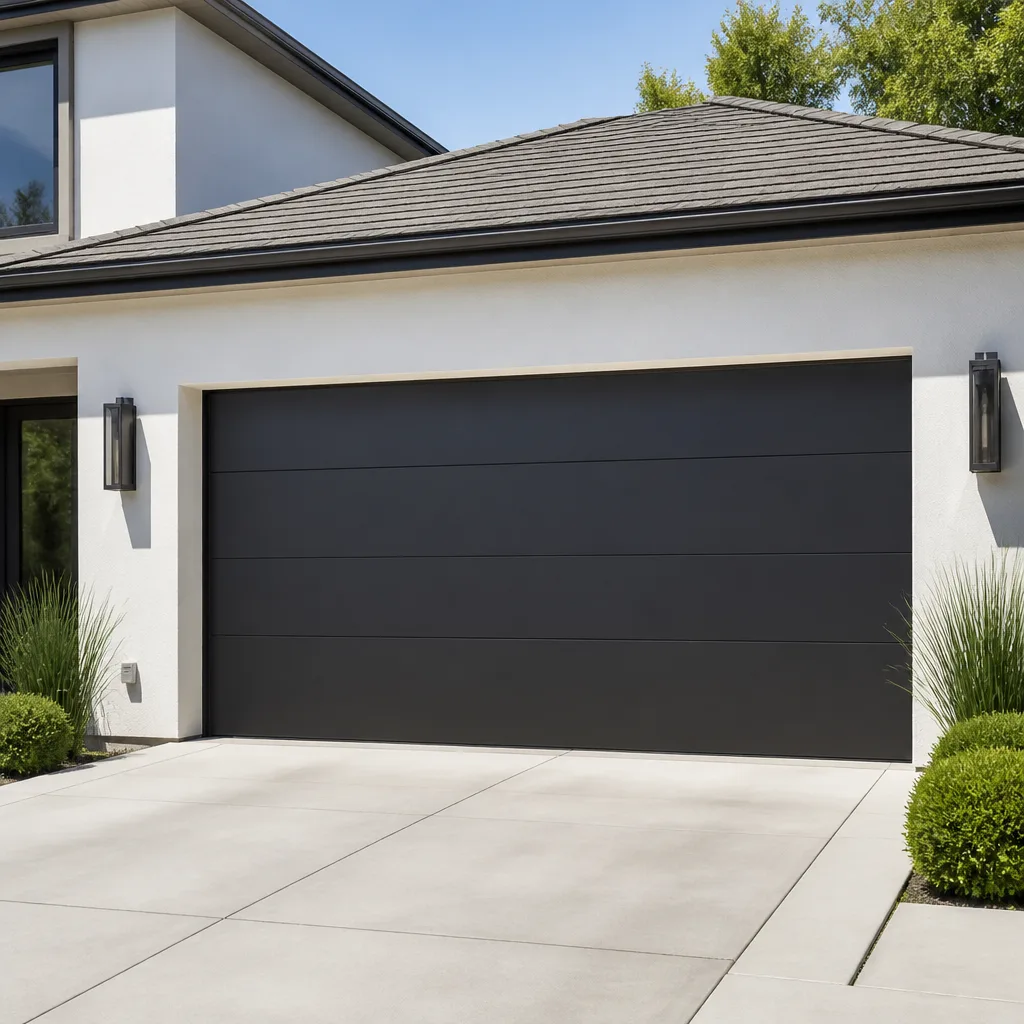 Modern flush
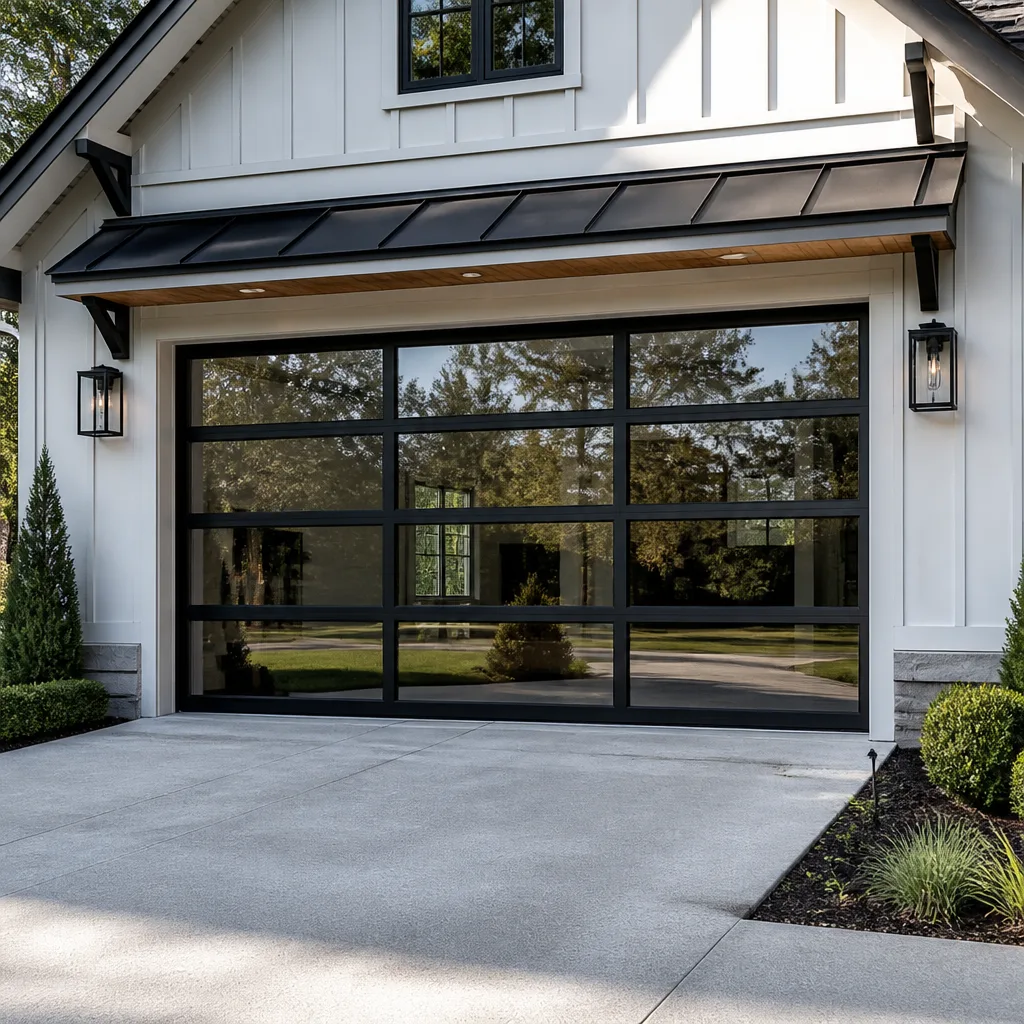 Full-view glass
 LiftMaster openers
 Chamberlain openers
Full 25-point door and opener safety check with every visit - springs, cables, rollers, tracks, and your LiftMaster or Chamberlain opener included
You get a price before we start. It does not change when the pro arrives.
Get your free estimateGarage Door Emergency Preparedness Guide for Levittown Homes
The scariest garage door failures don’t happen when you’re ready for them. They happen when the door is your only way in, the car is parked inside, or a storm is rolling in and the door won’t close. Here’s the counterintuitive part: most of what makes a garage door emergency feel like a crisis isn’t the broken part. It’s not knowing what to do in the first ten minutes. A snapped spring is a mechanical problem with a fixed solution. Panic is what turns a 20-minute repair into a 3-hour ordeal. This guide walks Levittown homeowners through the exact playbook: how to release a door by hand, how to secure one that won’t shut, what to do if your car is trapped, and the information to have ready so a repair call goes fast. Read it once now, and you’ll never be caught flat-footed.
Quick Answer
If your garage door fails in Levittown, the first move is to stop pressing the button and stop forcing the door. If the door is stuck open or won’t close, engage the manual release, lower the door by hand if it’s safe, and secure the opening. If a spring has snapped, do not attempt to lift or repair it yourself. Then call a garage door professional with your door brand, opener model, and a clear description of the symptom so you get an accurate estimate over the phone rather than a guessing game on-site.
Styles & brands we work with
- Raised-panel steel
- Carriage house
- Modern flush
- Full-view glass
- LiftMaster openers
- Chamberlain openers
Table of Contents
- The First Five Minutes: What to Do When Your Door Fails
- How to Manually Release and Operate Your Door Safely
- How to Secure a Door That Won’t Fully Close
- Car Trapped Inside? The Right Sequence of Steps
- What to Have Ready Before You Call for Emergency Repair
- Is It a True Emergency or a Same-Morning Fix?
- Levittown Weather, Housing, and Your Garage Door
- Prevention: The 10-Minute Check That Heads Off Most Emergencies
The First Five Minutes: What to Do When Your Door Fails
The first five minutes after a garage door fails set the tone for everything that follows. Most homeowners make the same mistake: they hit the opener button again and again, hoping the door will suddenly cooperate. It won’t. Repeated cycling of a strained opener can burn out the motor or strip the drive gear, turning a spring repair into a spring-and-opener repair. Stop pressing buttons.
Here’s the calm, ordered response we walk Levittown homeowners through when they call:
- Stop all operation. Don’t press the wall button or the remote. If the door is mid-travel and stuck, leave it where it is unless it’s blocking a car or a person.
- Look and listen. A sharp bang from the overhead area usually means a torsion spring snapped. A grinding or humming opener with no movement points to the opener or a stripped gear. A door that moves a few inches then reverses suggests a sensor or travel-limit issue.
- Check the safety sensors. The two small lenses near the floor at each side of the opening should have a steady light. A blinking or dark sensor is a common cause of a door that won’t close, and it’s the one failure you can often resolve without a technician.
- Keep people and pets clear. A door with a broken spring is held up by nothing but the opener, and openers aren’t designed to carry that weight. Don’t walk under a door that’s hanging on a failed spring.
- Decide: manual or call. If the door needs to move to get a car out or secure the house, go to the manual release steps below. If it’s stuck open and no one needs access, leave it and call.
That last point matters in Levittown, where many homes use the garage as the everyday front door. A door stuck open is an access and security problem, not just a mechanical one, so the decision to secure it comes before the decision to fix it.
How to Manually Release and Operate Your Door Safely
Every garage door with an opener has a manual release, usually a red cord hanging from the trolley that rides the rail. Pulling it disconnects the door from the opener so you can move it by hand. This is the single most useful skill in a garage door emergency, and most people have never done it.
Before you pull anything, understand the danger. A door with a snapped spring can weigh far more than a working door because the spring is what counterbalances the weight. If you pull the release on a door with a broken spring, the door may drop hard and fast. So the release procedure depends on why the door failed.
If the door is intact but the opener failed or the power is out
- Make sure no one is standing under the door.
- Pull the red release cord straight down and toward the door until it clicks out of the trolley.
- Lift the door slowly by hand. A properly balanced door should rise with modest effort. If it feels extremely heavy or won’t stay up, stop.
- Open it fully and prop or secure it before walking away.
- To re-engage, close the door fully and pull the release cord again (or follow your opener’s re-engagement step) so the trolley catches the door arm.
If a spring has snapped
Do not lift the door by hand more than necessary, and never try to raise it to the ceiling. The springs are under high tension, and a door with a broken spring can come down with serious force. If you must move the door to free a car or close the house, do it slowly with someone spotting, and don’t let anyone walk beneath it. A high-tension torsion spring repair is not a do-it-yourself job; it’s one of the few home repairs where a mistake can cause real injury. That’s why we list garage door spring repair as a named service and treat it with the care it deserves.
How to Secure a Door That Won’t Fully Close
A door that won’t close leaves your home, and everything in the garage, exposed. You may not be able to fix the door until a technician arrives, but you can usually secure the opening in a few minutes without a locksmith and without spending money. Work through these in order, from simplest to most involved:
- Clear the sensor path. Sweep away leaves or a dropped tool, straighten a bumped sensor bracket, and check that the indicator lights are steady. This one fix resolves a surprising share of “won’t close” calls for Levittown homeowners, especially after windy weather blows debris into the opening.
- Lower the door manually. If the opener is the problem, release the door and walk it down by hand. Even a door that won’t latch is more secure down.
- Block the bottom. A length of lumber or a heavy object braced against the bottom panel keeps a door from being lifted from outside. Put it on the inside, where it can’t be reached through the gap.
- Lock the track or the latch. Many doors have a manual slide lock or a lock bar that slides through the track. Engage it to prevent the door from being raised.
- Post a temporary barrier. If the opening can’t fully close, a piece of plywood cut slightly larger than the gap and braced inside adds another layer. It isn’t a permanent fix, but it holds until the repair.
The goal is a door you can’t easily lift from outside and a gap that isn’t an invitation. None of these steps replaces the repair, but they buy you time and let you sleep.
Car Trapped Inside? The Right Sequence of Steps
A car locked in a garage by a failed door is one of the most stressful calls we take. The instinct is to force the door or floor the car, and either can make things worse. The right move is a deliberate sequence that protects the car and avoids compounding the mechanical problem.
- Don’t try to drive through or push the door. Aluminum and steel panels dent and bend under pressure, and a bent door often costs more to repair than the original failure.
- Identify the failure first. Broken spring, dead opener, or a sensor problem? If the door is intact and the opener is the only issue, the manual release is your path. If a spring has snapped, go slow and get help spotting.
- Release the door and lift it by hand. With the opener disengaged, raise the door far enough to drive out. Have a second person guide you and watch the door so it doesn’t drop.
- Prop the door open before you drive. Never drive under a door that’s only held by an opener or by hand. Secure it high with a sturdy prop or a clamp on the track.
- Get the car out, then re-secure the opening. Once the car is clear, lower and block the door as described above until the repair is done.
If the door won’t lift even with the opener disengaged, stop. That’s a sign of a spring failure or a bent track, and forcing it can crack a panel or bend the track further, which raises the cost of the eventual repair. Call a professional at that point. For general repairs beyond the emergency itself, our garage door repair page covers what’s involved.
What to Have Ready Before You Call for Emergency Repair
The faster a technician can understand your door, the faster you get an accurate estimate and the right parts on the first visit. When you call for emergency garage door service, having a few facts ready makes the whole call shorter and sharper. Here’s what we ask for, and why:
- The door brand. We work on LiftMaster, Chamberlain, Genie, Clopay, Amarr, Wayne Dalton, Craftsman, and Raynor equipment, so brand tells us what we’re likely dealing with before we arrive.
- The opener model. If the problem is the opener, the model number (usually on a label under the light cover) tells us whether it’s a smart-home-capable unit or an older one and what parts it takes.
- The symptom, in plain words. “Won’t close” is different from “closes then reverses,” which is different from “hums but doesn’t move.” Describe what you see and hear.
- What you’ve already tried. If you’ve checked the sensors, pulled the manual release, or cycled the breaker, say so. It keeps us from repeating steps.
- Whether a car is trapped or the house is open. This tells us how urgent the call is and what to prioritize.
With those details, a technician can usually give you a realistic price range over the phone and confirm what to expect on arrival. For a door that won’t open or close at all, that call is the fastest route to a working door again.
Is It a True Emergency or a Same-Morning Fix?
Not every garage door failure is an emergency, and treating a routine problem like a crisis can add cost and stress without changing the outcome. The honest question to ask is simple: does the door need to move or close before tomorrow? If yes, it’s an emergency. If no, a same-morning or next-available appointment is usually the smarter call.
Here’s how we’d sort the two:
- Genuine emergency: the door is stuck open and the house is exposed; a car is trapped; the door is hanging or clearly unsafe; a door is stuck half-open and won’t move either way.
- Same-morning fix: the opener is dead but the door can be closed and locked manually; a sensor is misaligned but the door can be secured; the door is noisy but still opens and closes.
The cost difference matters. Emergency service exists for exactly the situations where access or security can’t wait. In our experience, staging an urgent call for a problem that could safely wait a few hours to the next morning means paying a premium you didn’t need to pay. An opener that hums but won’t run, or a door that reverses at the floor, are frustrating but rarely true emergencies if you can secure the door and leave the car outside for a night. Spring failures that leave the door stuck open, dangling panels, and trapped cars are the situations where the call is worth it now. If you’re unsure which bucket you’re in, describe it on the phone and we’ll tell you plainly.
Levittown Weather, Housing, and Your Garage Door
Levittown is a planned community with a housing stock that mostly dates to the post-war postwar era, and the typical home here is a story-and-a-half or Cape Cod with an attached or integrated garage. That design shapes how garage doors fail. Many of the original doors have been replaced over the years, but plenty of homes still run older openers built on legacy platforms, so a technician who works across older and newer systems matters. Our technicians have up to 9 years of experience, and we’re fluent with both smart-home-connected units and the older hardware you’ll still find in a lot of Levittown garages.
The local climate plays a real role too. Levittown sits in southeastern Pennsylvania, where summer heat and humidity and winter freeze-thaw cycles both work on a garage door. Heat can cause metal to expand, and a track that’s slightly out of adjustment in July can bind or drag. In winter, ice can form at the bottom seal, freezing the door to the floor so the opener strains against a door that can’t lift. A door that opens fine most of the year can start reversing or dragging when the temperature swings. If your door only acts up in cold snaps or heat waves, the problem is often balance or track alignment, not a failing opener, and that’s worth knowing before you replace anything. For opener-specific troubleshooting, our garage door opener repair page goes deeper.
Prevention: The 10-Minute Check That Heads Off Most Emergencies
Most garage door emergencies give a warning weeks before the failure. A spring rarely snaps without a season of strange noises first, and an opener rarely dies without straining for a while beforehand. Ten minutes of checking every so often catches most of those warnings, and it’s the single best way to avoid a Levittown emergency call. Run this quick check:
- Listen. Open and close the door once. Grinding, squealing, or popping sounds point to worn rollers, bearings, or a spring under stress.
- Test the balance. Release the opener and lift the door halfway by hand. It should stay there. A door that drops or won’t hold is unbalanced, often a sign of a weakening spring.
- Check the sensors. Confirm both indicator lights are steady and that nothing sits in the path.
- Look at the springs. A torsion spring with a visible gap or a stretched extension spring is a failure waiting to happen. Leave the repair to a technician, but look for the warning signs.
- Inspect the track and rollers. A dented track or a cracked roller is cheap to fix and expensive to ignore.
- Lubricate the moving parts. A little lubricant on the rollers, hinges, and springs (per your door manufacturer’s guidance) reduces strain on the opener.
None of this is a substitute for professional service, but each item heads off a common failure. When something looks off, get it looked at before it becomes the midnight call. Our main page, Levittown Garage Door Repair Pros, gives you a clean starting point if you’re not sure where to begin.
Common Mistakes to Avoid
We’ve seen the same handful of mistakes turn manageable garage door problems into expensive ones. Here’s what to skip:
- Forcing the door by hand or with a car. Pushing a stuck door can bend panels or warp the track, and panel repair often costs more than the original issue. Let the door stay put and treat the cause.
- Pressing the opener button again and again. Repeated cycling against a failure can burn out the motor or strip the gear. One press to confirm the problem, then stop.
- Trying to fix a broken spring yourself. Torsion springs carry high tension and can cause serious injury. This is the job to hand to a trained technician, without exception.
- Assuming the opener is the problem. In Levittown, a door that opens fine in fall but strains on cold mornings is often an alignment or seal issue, not a dying opener. Diagnose before you replace.
- Leaving the house open and walking away. A door stuck open is a security gap. Secure it first, then arrange the repair.
- Calling an emergency line when a morning appointment would do. For a problem you can secure safely and that doesn’t trap a car, a standard appointment is usually the better value. An honest professional will tell you which one you need.
See the difference
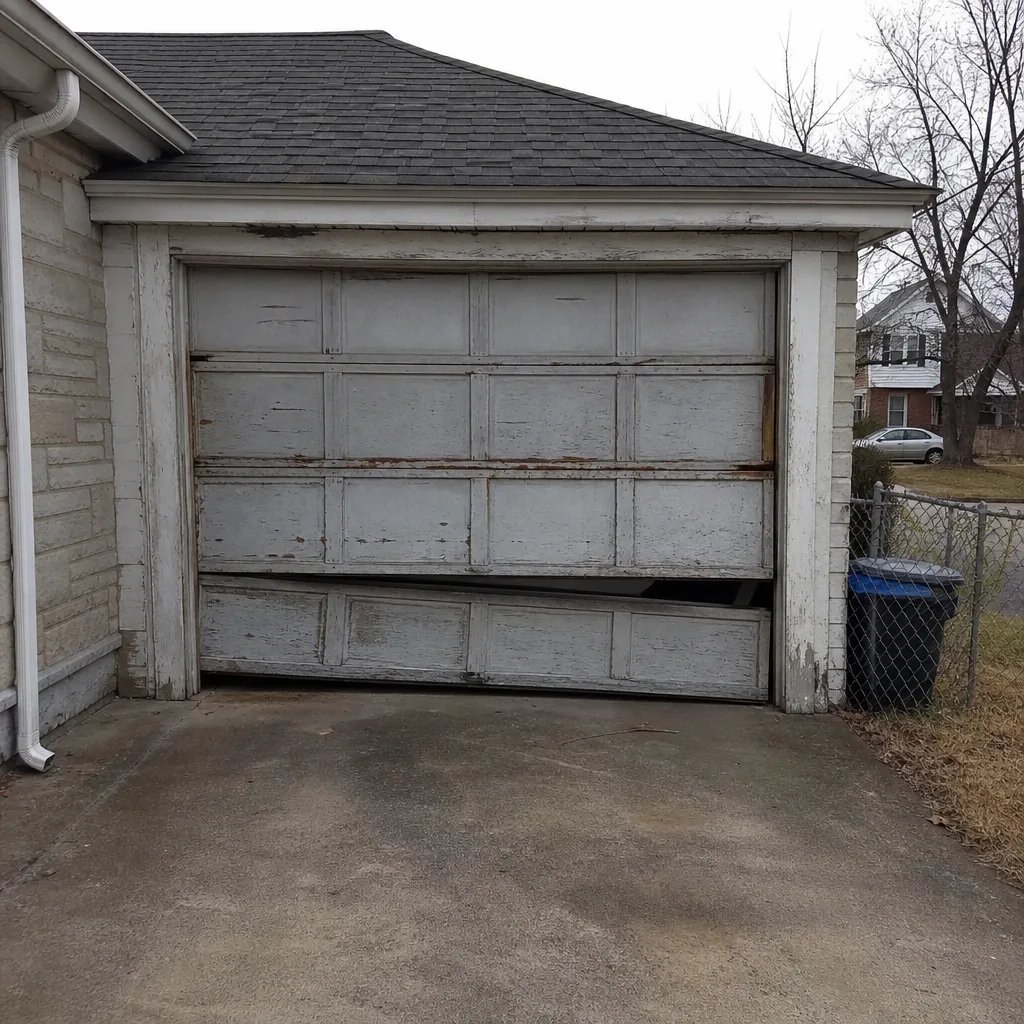 Before
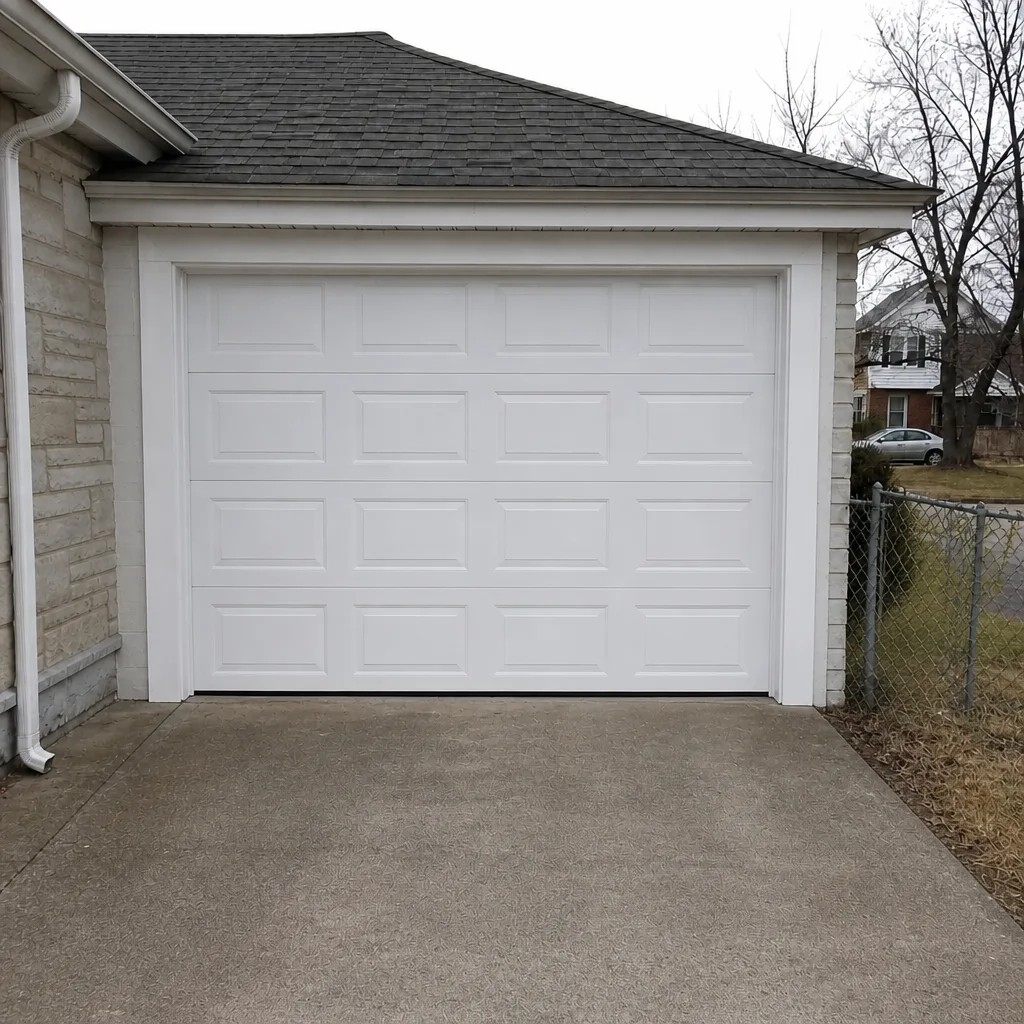 After
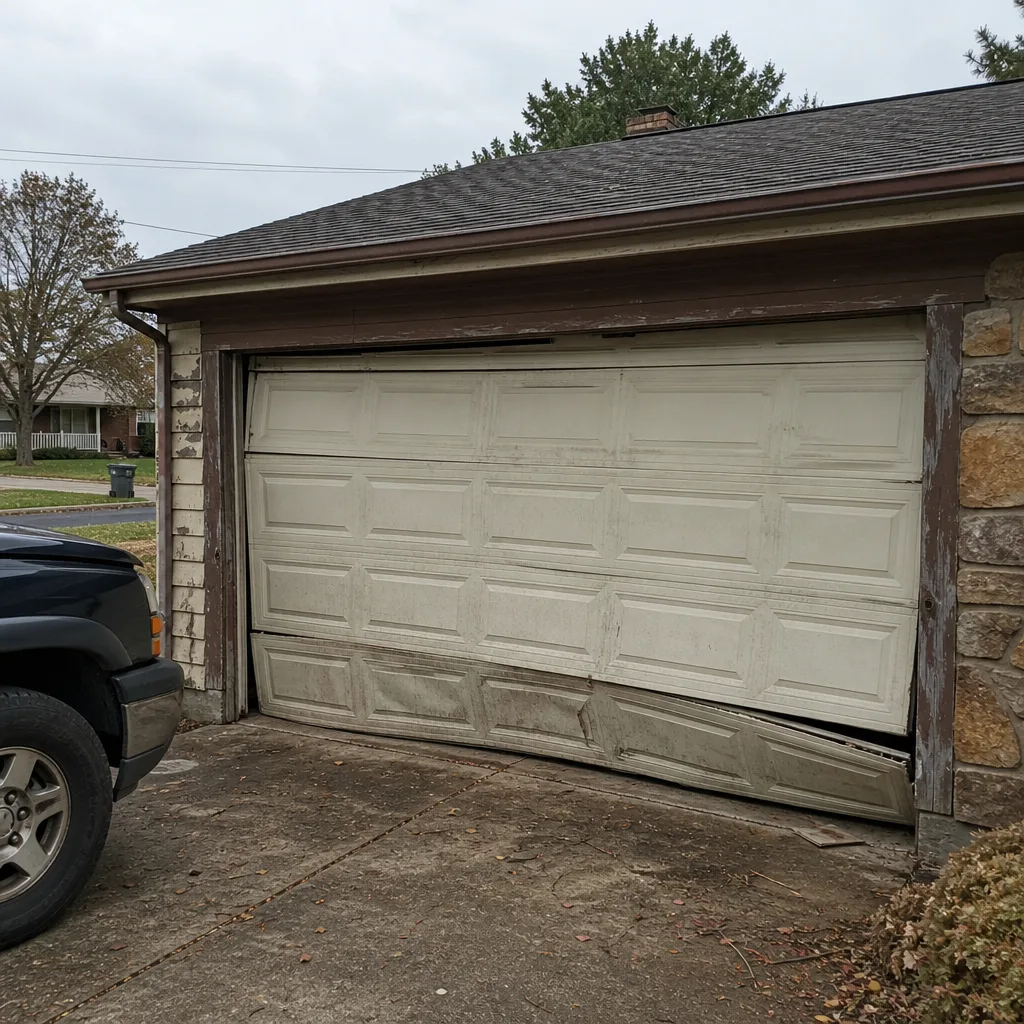 Before
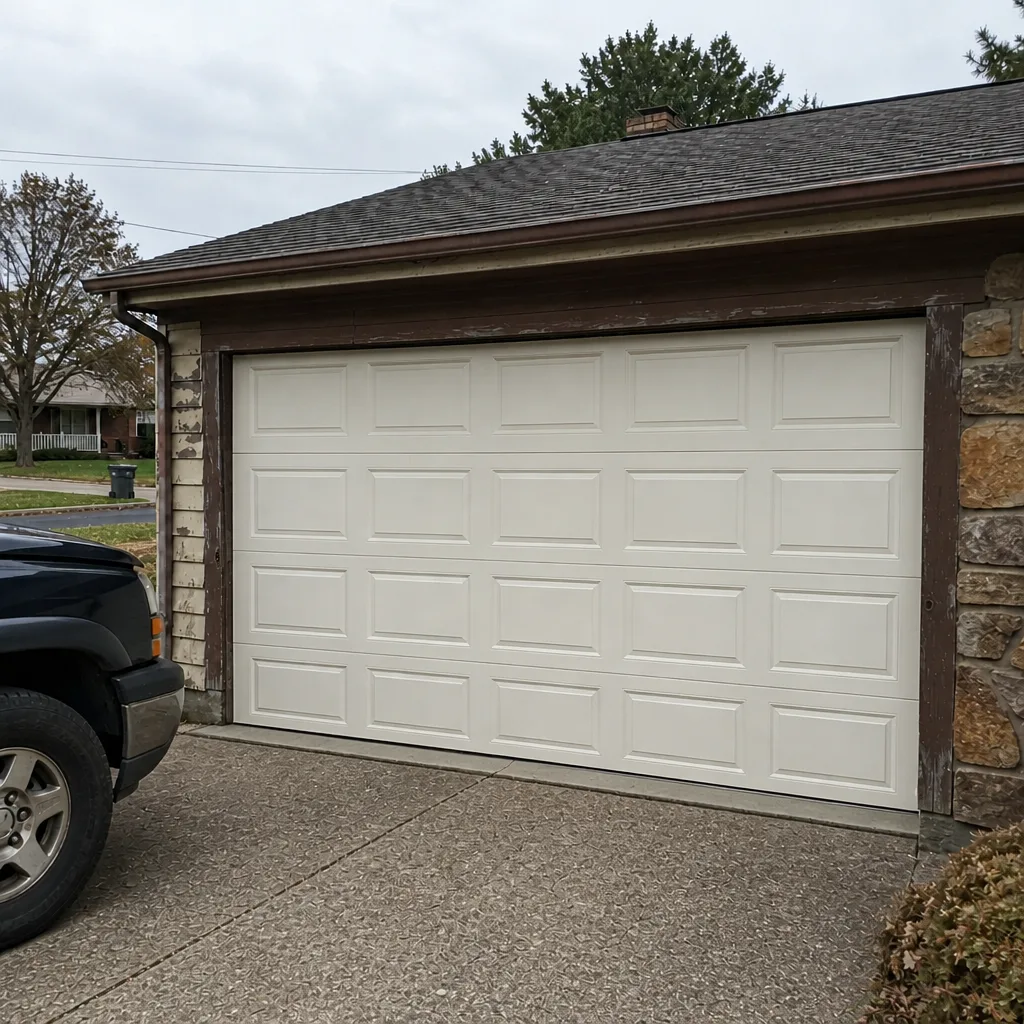 After
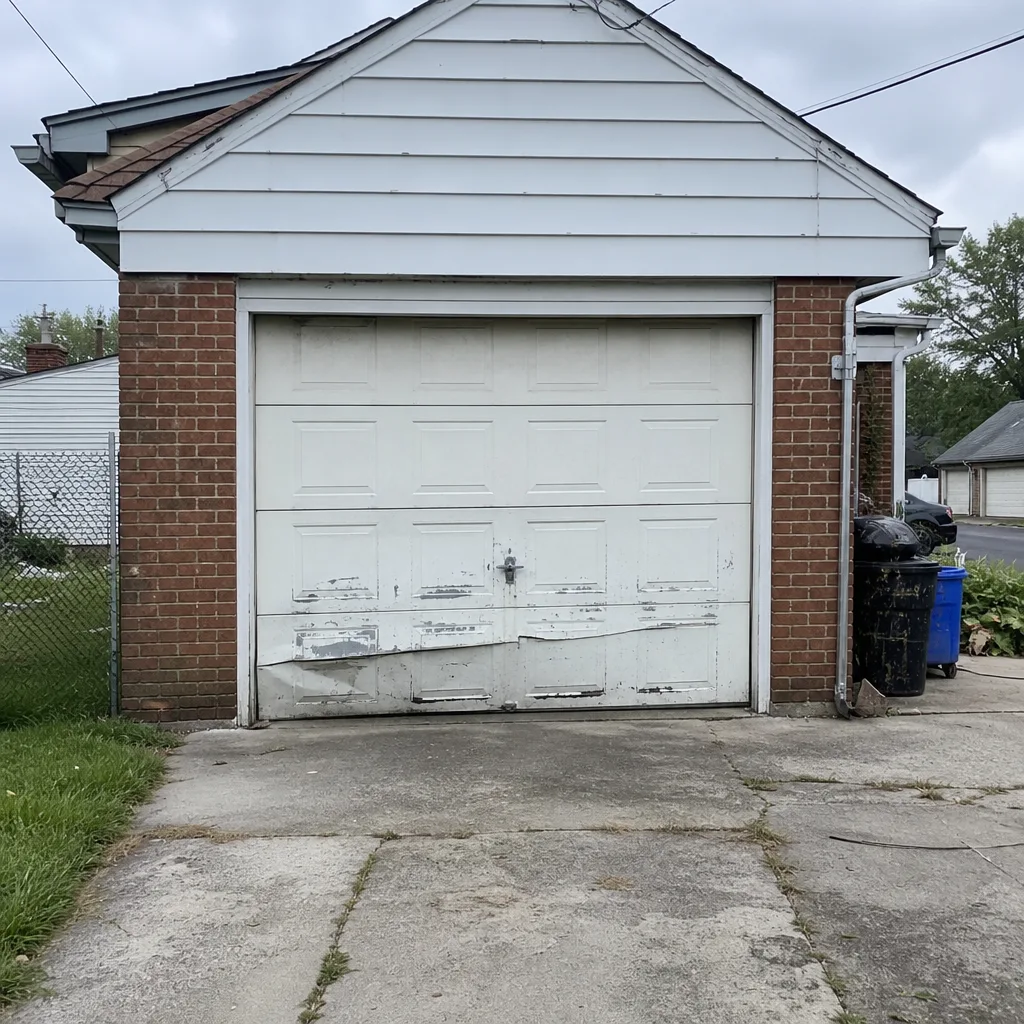 Before
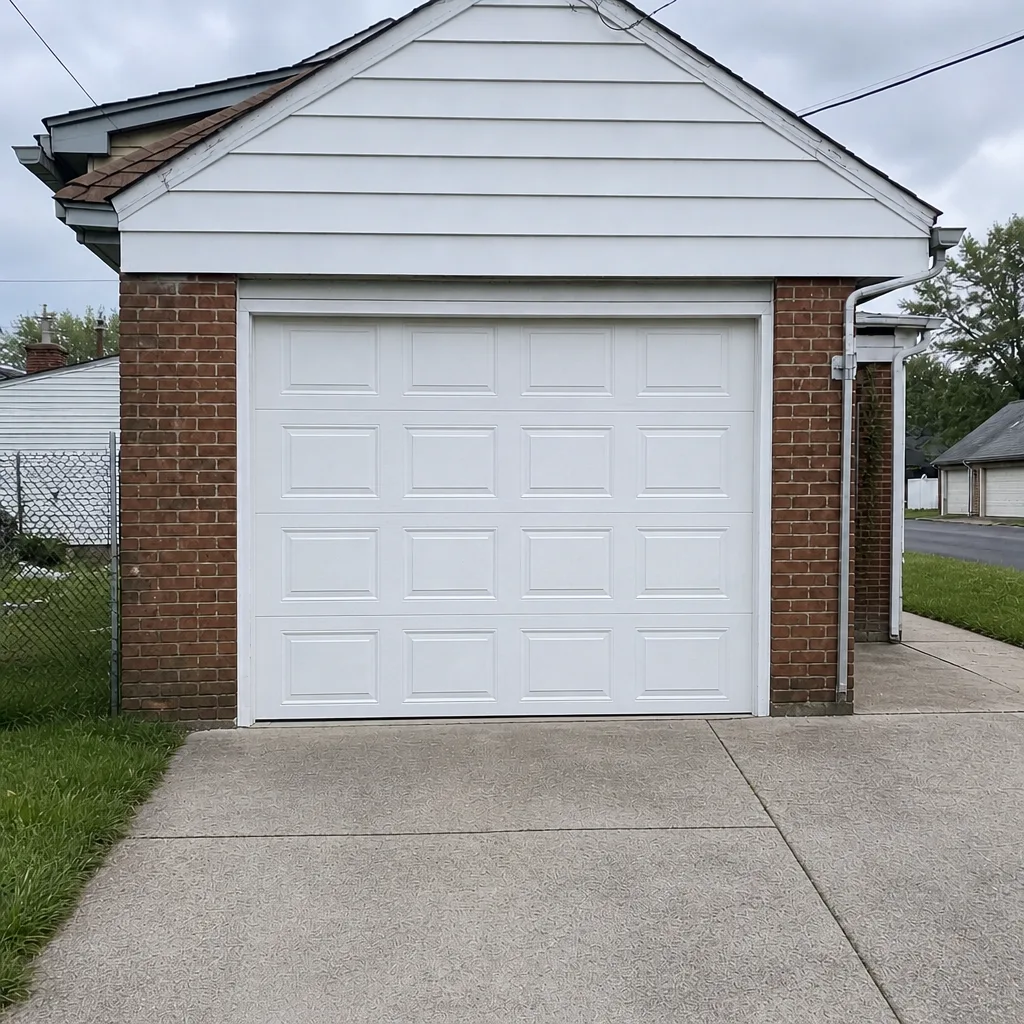 After
When to Call a Professional
Some garage door problems need a trained technician, and a broken spring is the clearest one. Any spring failure, a door that’s fallen off its track, a panel that’s come loose, an opener that hums without moving, or a door hanging unevenly all warrant a professional call. The same goes for a door that won’t close and can’t be secured safely, and any situation with a car trapped inside. These aren’t cases where a handyman with a ladder is the right answer, because high-tension components and structural panels need the right tools and the right training. If you’re in Levittown and unsure whether your situation is urgent, call and describe it. Levittown Garage Door Repair Pros offers free estimates in Levittown – call (888) 618-9767, and we’ll tell you honestly whether you’re looking at an emergency or a fix that can wait.
Frequently Asked Questions
Emergency garage door repair in Levittown is priced per job, and the range depends on the failure and the parts needed. Spring repair, opener repair, and track or roller work each carry different typical estimates, and any emergency or after-hours work may add to the base. What matters most is that you get a written estimate before any work starts, so you know the price up front. Call (888) 618-9767 for an exact quote – estimates are free.
We offer emergency garage door service for situations that can’t wait, including doors stuck open, cars trapped inside, and doors hanging or unsafe. Same-day service is available for urgent repairs. Call (888) 618-9767, describe the symptom, and we’ll tell you what to expect.
The written estimate is the price. We quote the work before it starts, and the estimate sets the final cost. If we find something that changes the scope, you’ll hear about it and agree to it before we proceed. Call (888) 618-9767 to book a free estimate.
The local technician who performs the work is licensed and insured as their state requires. We connect you with independent local professionals who do garage door work as their trade, not general handymen. Call (888) 618-9767 to get started.
Check the safety sensors first, because a blinking or dark sensor is the most common cause of a door that won’t close. If that’s not it, release the opener, lower the door by hand, and block the bottom with a bar or heavy object on the inside, then engage any manual lock. Once it’s secured, call (888) 618-9767 to schedule the repair.
Repair is usually the right call when the door is structurally sound and the failure is in the springs, opener, rollers, or track. Replacement makes more sense when the door is badly damaged, rusted through, or you want a different look. We repair first and recommend replacement only when it genuinely makes sense, and we handle both. Call (888) 618-9767 for a free estimate.
The Bottom Line
A garage door emergency is far more manageable when you already know the playbook. Stop pressing the button. Check the sensors. Release the door and secure the opening before you worry about the repair. Don’t lift a door with a broken spring, and don’t force one that’s stuck. Have your brand, opener model, and symptom ready so a call goes fast, and be honest with yourself about whether it’s a true emergency or a same-morning fix. Every one of those steps shortens the outage and protects your car, your home, and your wallet. Keep this guide somewhere you’ll remember it, and the next failure won’t be a panic – it’ll be a plan.
Written by the team at Levittown Garage Door Repair Pros.